<!--
title: Reading is the new superpower in the AI era
description: AI made writing nearly free. Understanding what you read is now the scarce skill, and it is built between about four and eleven. Why we're building EarnPlay's Reading Journey.
published: 2026-11-25
category: earnplay
hero: /static/blog/earnplay-series/hero-reading-superpower.png
-->

# Reading is the new superpower in the AI era

<p class="blog-lead">For most of history, the advantage went to people who could make things. Write the report. Run the numbers. Draft the plan. Then AI showed up and made all of that roughly as scarce as tap water.</p>

You can now get a polished essay in eight seconds. A summary of a book you never opened. A strategy deck that sounds like it was written by a consultant who bills by the hour. Producing words costs basically nothing.

## Writing got cheap. Understanding didn't.

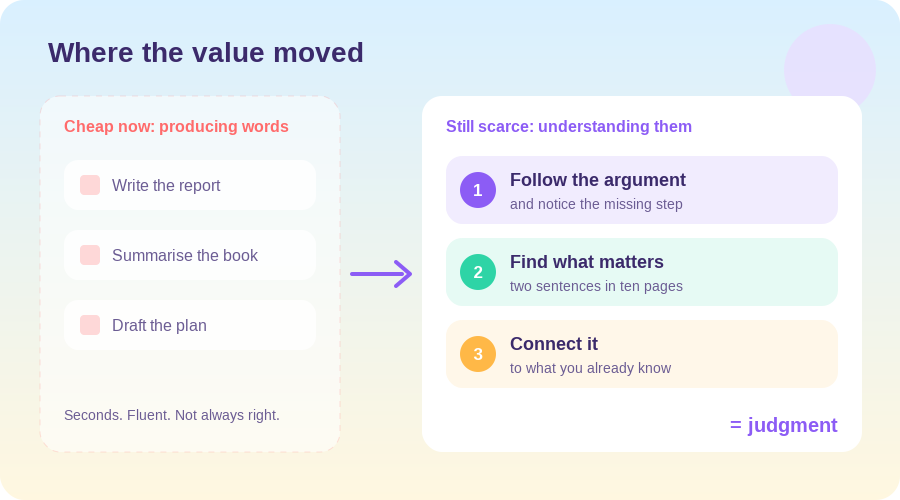
So what's scarce now? **Understanding them.**

We read more text in a day than our grandparents saw in a month, and a growing share of it was written by something that has never been wrong in its own opinion. AI is fluent. Fluent and correct are different things, and the gap between them is exactly where people get burned.

<figure class="blog-figure blog-figure--chart">
<img src="/static/blog/earnplay-series/chart-reading-value.svg" alt="Diagram: writing the report, summarising the book and drafting the plan are now cheap. Following the argument, finding what matters and connecting it to what you know are still scarce, and together they add up to judgment." loading="lazy" width="900" height="500">
<figcaption>Machines made the left column cheap. The right column still needs a reader.</figcaption>
</figure>

## What reading well actually involves

Reading well, the real kind, is harder than it sounds. You follow an argument to the end and notice the step that's missing. You find the two sentences in a ten-page document that actually matter and ignore the rest.

And then you do the part no tool can do for you. You connect what you just read to everything you already know, and you change your mind a little, or you don't, but now you know why.

That last bit is what we used to call judgment. **Turns out we're going to need a lot of it.**

## Outsource the reading, outsource the thinking

Here's the irony. As machines get better at writing, it gets very tempting to stop reading. Why get through forty pages when a chatbot will hand you five bullet points and a confident tone? Fair question.

<blockquote class="blog-pullquote"><p>If you outsource your reading, you outsource your thinking along with it.</p></blockquote>

And then the best you can do is forward things. Plenty of people have built careers on forwarding things. I'm not sure it's a growth market.

## The skill is built between four and eleven

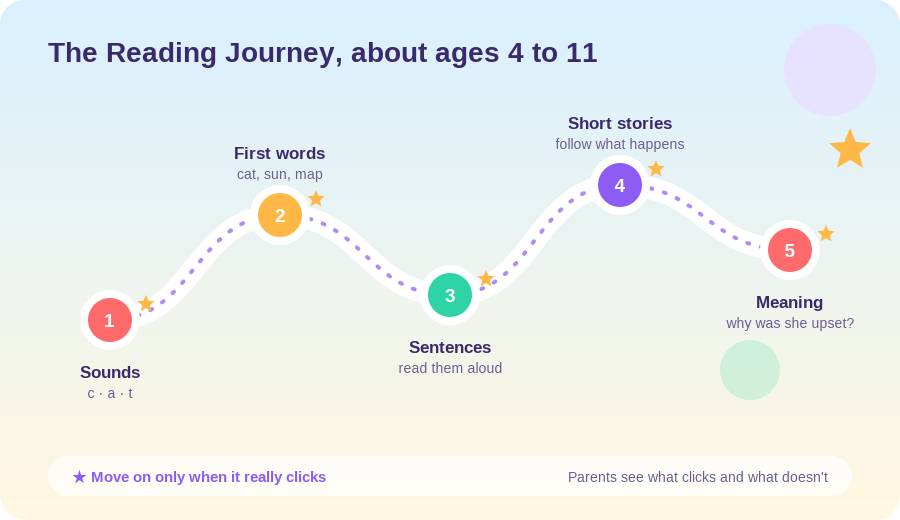
I keep coming back to one thought. This skill doesn't appear at 35 because you finally downloaded a productivity app. It gets built much earlier, somewhere between learning that "c-a-t" is a cat and figuring out why the character in the story was upset. Sound by sound, sentence by sentence, between about four and eleven.

<figure class="blog-figure blog-figure--chart">
<img src="/static/blog/earnplay-series/chart-reading-journey.svg" alt="Diagram of the Reading Journey as a path with five stops: sounds, first words, sentences, short stories, and questions about meaning. The child moves on only when a step really clicks." loading="lazy" width="900" height="520">
<figcaption>The Reading Journey: from single sounds to asking what a story means.</figcaption>
</figure>

## The Reading Journey in EarnPlay

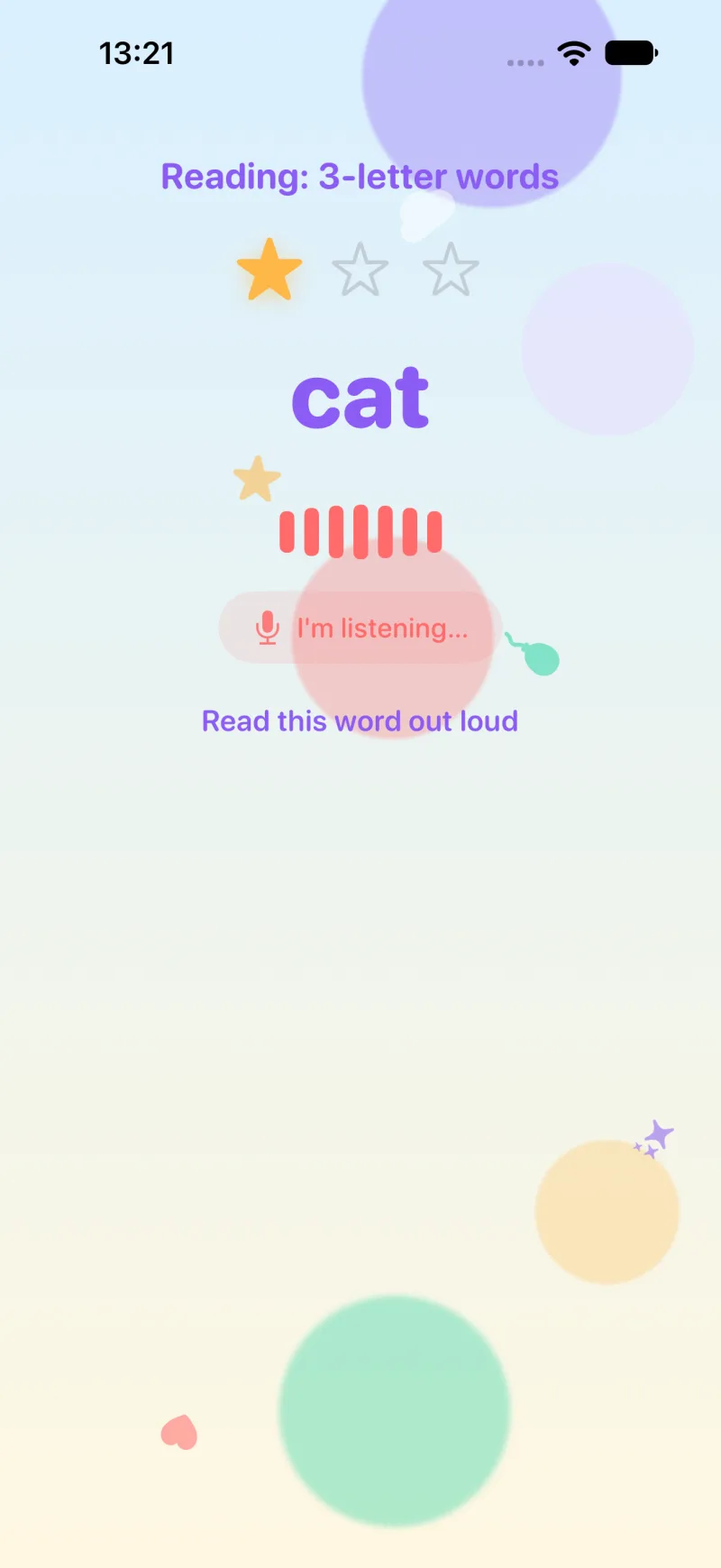
Which is why, at PatakoLabs, we've been working on the Reading Journey for [EarnPlay](/projects/earnplay). Kids read out loud, the app listens and encourages them, and they work their way up from their first three-letter words to short stories with questions that make them think about what the text actually means.

They only move on when they've really got it. Parents can see what's clicking and what isn't. Kids get a map with stars, which in my experience is a surprisingly strong motivator at any age.

<figure class="blog-figure blog-figure--phone">
<img src="/static/earnplay/10-reading-game.webp" alt="EarnPlay reading game on iPhone: a word on screen for the child to read out loud" loading="lazy" width="800" height="1739">
<figcaption>The reading game in EarnPlay today: read the word out loud.</figcaption>
</figure>

The point isn't to rush anyone to the finish line. It's to raise kids who can read something and think for themselves about it. **In a world where machines write most of the words, that seems like a reasonable thing to give them.**

<aside class="blog-cta">
<p><strong>EarnPlay is on iPhone and iPad.</strong> Kids finish a short reading, sounds or maths game to earn time in the apps you choose, and the lock comes back when the time ends.</p>
<p class="blog-cta__actions"><a class="blog-cta__button" href="/go/earnplay/app-store">Get EarnPlay on the App Store</a> <a href="/">See how EarnPlay works</a></p>
</aside>